.png)
Healthcare Workforce Solution
- 3 days ago
- 4 min read

Building a Stronger Future for Healthcare Organizations
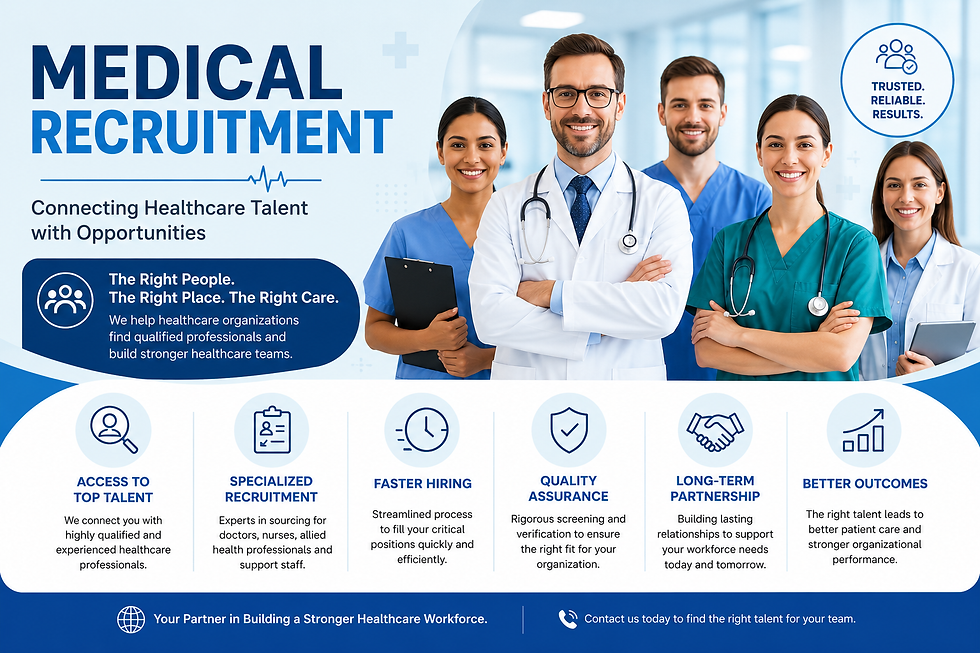
The healthcare industry is one of the most important sectors in the world. Hospitals, clinics, nursing facilities, and healthcare organizations depend on skilled professionals to provide quality patient care. However, many healthcare providers face ongoing staffing challenges, including talent shortages, high turnover rates, and increasing workforce demands. This is where a reliable work force solution becomes essential.
A healthcare workforce solution helps organizations find, manage, and retain qualified healthcare professionals. By improving workforce planning and staffing strategies, healthcare facilities can maintain operational efficiency while ensuring excellent patient outcomes. As the healthcare industry continues to evolve, having the right workforce solution is no longer an option—it is a necessity.
What Is a Healthcare Workforce Solution?
A healthcare workforce solution refers to a strategic approach designed to address staffing needs within healthcare organizations. It includes recruitment, workforce management, employee retention, scheduling, training, and talent development.
The goal of a healthcare work force solution is to ensure that healthcare facilities always have the right professionals in the right positions at the right time. Whether it involves hiring nurses, physicians, therapists, or administrative staff, workforce solutions help organizations overcome staffing shortages and improve productivity.
These solutions can be customized to meet the specific needs of hospitals, long-term care facilities, private practices, and healthcare systems of all sizes.
Why Healthcare Workforce Solutions Are Important
Healthcare organizations operate in a fast-paced environment where staffing shortages can directly affect patient care. Without adequate staffing, healthcare providers may experience increased workloads, employee burnout, and lower patient satisfaction.
A well-planned work force solution helps organizations:
Reduce staffing gaps
Improve patient care quality
Enhance employee satisfaction
Lower recruitment costs
Increase operational efficiency
Strengthen workforce stability
By addressing workforce challenges proactively, healthcare organizations can focus on delivering exceptional care while maintaining a productive work environment.
Key Components of an Effective Healthcare Workforce Solution
1. Strategic Recruitment
Recruitment is one of the most important aspects of any healthcare workforce strategy. Finding qualified professionals requires a targeted approach that identifies candidates with the right skills, experience, and certifications.
An effective work force solution utilizes modern recruitment techniques, including digital job platforms, professional networking, candidate sourcing, and talent databases. These methods help healthcare organizations attract top talent quickly and efficiently.
2. Workforce Planning
Healthcare facilities must anticipate future staffing needs based on patient demand, industry trends, and organizational growth. Workforce planning allows healthcare leaders to identify potential shortages before they become major problems.
A comprehensive work force solution includes workforce forecasting and planning tools that help organizations make informed staffing decisions.
3. Employee Retention
Recruiting talented professionals is only part of the equation. Retaining skilled employees is equally important. High turnover rates can create staffing disruptions and increase hiring costs.
Healthcare workforce solutions focus on retention strategies such as:
Competitive compensation packages
Career advancement opportunities
Professional development programs
Employee recognition initiatives
Work-life balance support
When employees feel valued and supported, they are more likely to remain with the organization long-term.
4. Flexible Staffing Models
The healthcare industry often experiences fluctuating patient volumes. During busy periods, organizations may require additional staff to meet demand.
A flexible work force solution allows healthcare facilities to scale their workforce efficiently through temporary staffing, contract professionals, per diem employees, and permanent placements. This flexibility helps organizations maintain service quality without overstaffing during slower periods.
Benefits of Healthcare Workforce Solutions
Improved Patient Care
Patient care quality is directly linked to workforce availability. When healthcare organizations have adequate staffing levels, patients receive timely treatment and personalized attention.
A strong work force solution ensures that qualified professionals are available when needed, leading to better patient experiences and improved health outcomes.
Reduced Employee Burnout
Healthcare professionals often work in high-pressure environments. Staff shortages can increase workloads and contribute to burnout.
By implementing an effective workforce solution, healthcare facilities can distribute responsibilities more evenly and reduce workplace stress. This leads to higher employee satisfaction and better overall performance.
Cost Savings
Recruitment, onboarding, and employee turnover can be expensive. A healthcare workforce solution helps organizations reduce these costs by improving hiring efficiency and increasing retention rates.
With better workforce management, healthcare providers can optimize staffing levels while controlling labor expenses.
Enhanced Compliance
Healthcare organizations must comply with various regulations and licensing requirements. Workforce solutions help ensure that employees maintain the necessary credentials and certifications.
This reduces compliance risks and helps organizations maintain high professional standards.
Technology and Healthcare Workforce Solutions
Technology has transformed workforce management in the healthcare industry. Modern workforce solutions often incorporate advanced software and digital tools to streamline staffing processes.
These technologies may include:
Applicant tracking systems
Scheduling software
Workforce analytics platforms
Employee engagement tools
Credential management systems
Using technology-driven work force solution strategies enables healthcare organizations to improve efficiency, make data-driven decisions, and respond quickly to staffing challenges.
Addressing Healthcare Workforce Shortages
Healthcare workforce shortages remain a major concern across many regions. Aging populations, increased healthcare demand, and workforce retirements continue to create staffing gaps.
Healthcare organizations can address these challenges through proactive workforce solutions that focus on:
Expanding recruitment efforts
Investing in employee training
Building talent pipelines
Supporting career development
Creating positive workplace cultures
A strategic work force solution helps organizations stay ahead of workforce shortages and maintain continuity of care.
Choosing the Right Healthcare Workforce Solution
Selecting the right workforce solution depends on the specific needs of each healthcare organization. Decision-makers should evaluate factors such as:
Staffing goals
Recruitment needs
Budget considerations
Workforce size
Technology requirements
Industry expertise
Partnering with experienced workforce professionals can help organizations develop customized solutions that support long-term success.
Conclusion
The healthcare industry depends on talented professionals to deliver exceptional patient care. As staffing challenges continue to evolve, healthcare organizations need reliable strategies to attract, manage, and retain skilled employees. A comprehensive work force solution provides the tools, resources, and expertise needed to build a strong and sustainable workforce.
From recruitment and workforce planning to employee retention and technology integration, healthcare workforce solutions play a vital role in organizational success. By investing in the right workforce strategy, healthcare providers can improve patient outcomes, enhance employee satisfaction, and create a more resilient healthcare system for the future.



Comments